
Calendar of Events

- This event has passed.
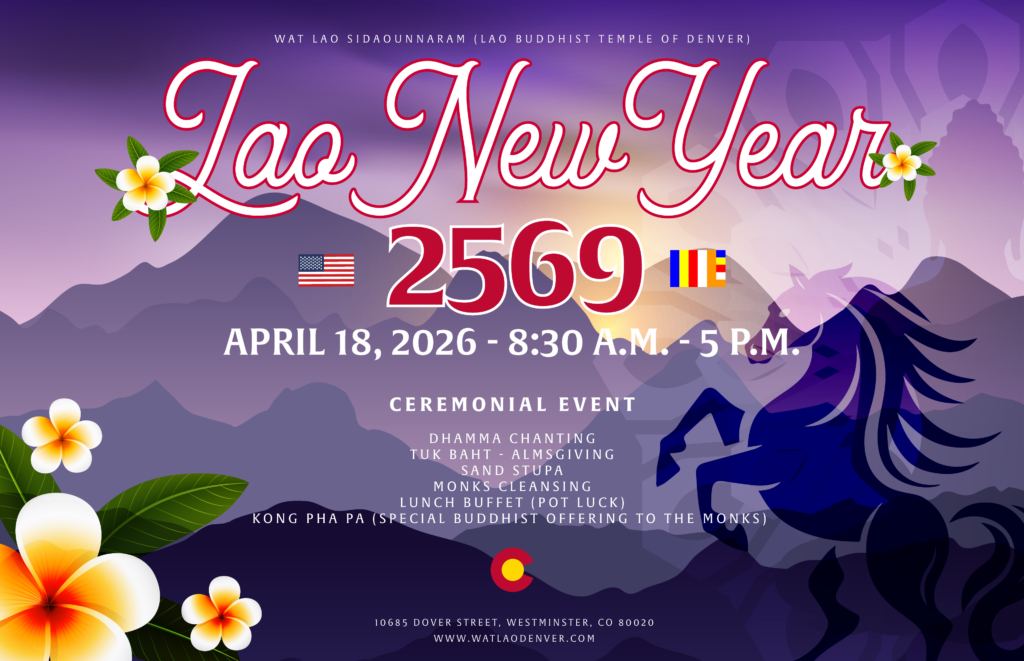
Lao New Year Ceremony 2569
April 18 @ 8:00 am – 5:00 pm
Lao New Year, known as Pi Mai (ປີໃຫມ່), is a time of spiritual renewal, purification, and showing gratitude to elders. While the public celebrations are famous for their energy, the heart of the holiday lies in quiet, symbolic ceremonies performed at temples and within the home.
Here is an overview of the traditional ceremonies and their significance.
1. The Ritual of Cleaning (Lao: ການທຳຄວາມສະອາດ)
Before the new year begins, families engage in a deep cleaning of their homes. This is not merely housework; it is a symbolic shedding of the past year’s misfortunes to make room for good luck.
- Statue Bathing (Song Nam Phra / ສົງນ້ຳພະ): This is the most vital ritual. Buddha images are taken down from their usual altars and placed on temporary stands. Devotees gently pour scented water—infused with flower petals and perfumes—over the statues.
- The Intent: This water is believed to become “blessed” after touching the icons. People often collect the runoff water to take home and sprinkle on family members for protection.
2. Making Merit (Lao: ການເຮັດບຸນ)
The new year is a peak time for Boun (merit-making). This focuses on selflessness and spiritual accumulation.
- Sand Stupas (Top Phousay / ຕົບພູຊາຍ): At the temple grounds, people build small stupas out of sand. These are decorated with small flags and flowers.
- The Symbolism: This act represents a “repayment” for the earth or sand that people have inadvertently carried away on their shoes from the temple throughout the year. It is a gesture of mindfulness and restoration.
- Animal Liberation: It is common to release small birds, fish, or turtles back into the wild. This act of mercy is believed to bring long life and clear one’s “karma.”
3. The Baci Ceremony (Lao: ພິທີບາສີ)
Perhaps the most intimate part of Pi Mai is the Baci (also called Sou Khuan). This ceremony is performed to “call back” the 32 components of the soul (Khuan) to the body to ensure harmony and health.
- The Pha Khuan: A handmade marigold pyramid serves as the centerpiece.
- The Thread Tying (Phouk Khen / ຜູກແຂນ): Elders tie white cotton threads around the wrists of the younger generation while chanting blessings.
- The Rule: These threads should be worn for at least three days to ensure the luck “sticks.”
4. Respecting Elders (Lao: ການສົງນ້ຳຜູ້ເຖົ້າ)
In a ritual similar to bathing the Buddha, younger family members perform a formal washing of their parents’ and grandparents’ hands.
- The Act: Children pour scented water over the hands of their elders.
- The Purpose: It is a formal way to ask for forgiveness for any wrongdoings committed during the past year and to receive a verbal blessing for the year ahead.